Allied Roofing
Estimated contract value: £18,000
We fitted a new slate roof to one elevation of a Grade II-listed building in Leeds city centre for HH Smith Construction on behalf of Allied Roofing.
The First White Cloth Hall, originally built in 1711, is being completely renovated by HH Smith before being repurposed as a museum. As part of the refurbishment, the original roof of the building is being completely replaced in three separate stages, one elevation in each stage.
We have worked with Allied previously, and having been engaged by HH Smith, they approached us to carry out the works to the first elevation of the roof on their behalf.
HH Smith had already removed the existing roof coverings and replaced the original timbers with new timber trusses.
We were engaged to put on a new slate roof, using Burlington slates. Before beginning the works, we visited the site to measure up the roof area, which totalled 780 metres.
We were responsible for managing deliveries arriving on site, ensuring drivers knew how to access the loading bay and making sure there were safe locations for materials which did not impact on any of the other trades working on site. At the start of the project, we were working around the joiners, with other trades working below us throughout.
As the client wanted a random appearance to the finished roof slates, we began by setting out the gauges needed and fitting lattes for the diminishing courses. We used a bumper hoist to get the slates from the ground onto the roof; fitting longer ones at the bottom of the roof and shorter ones at the top, with the correct headlap to ensure the roof would be fully watertight.
There was a large glass dome in the middle of the roof elevation; we fitted six inch lead along the eve for flashing of the box gutter to ensure this was also completely watertight.
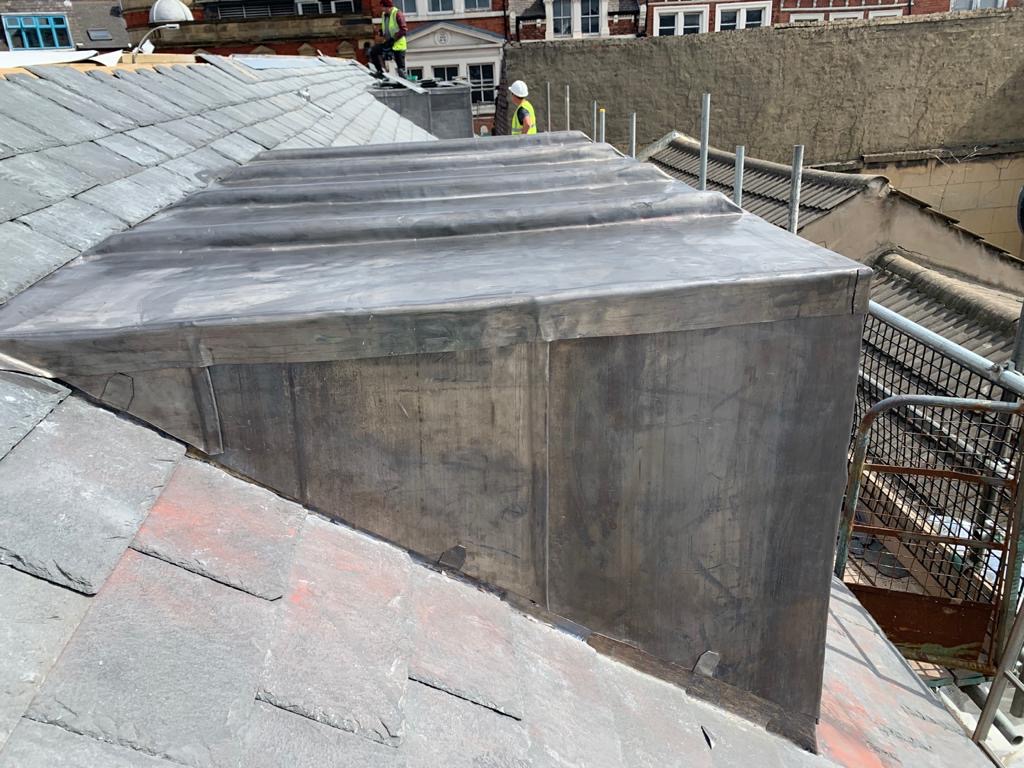
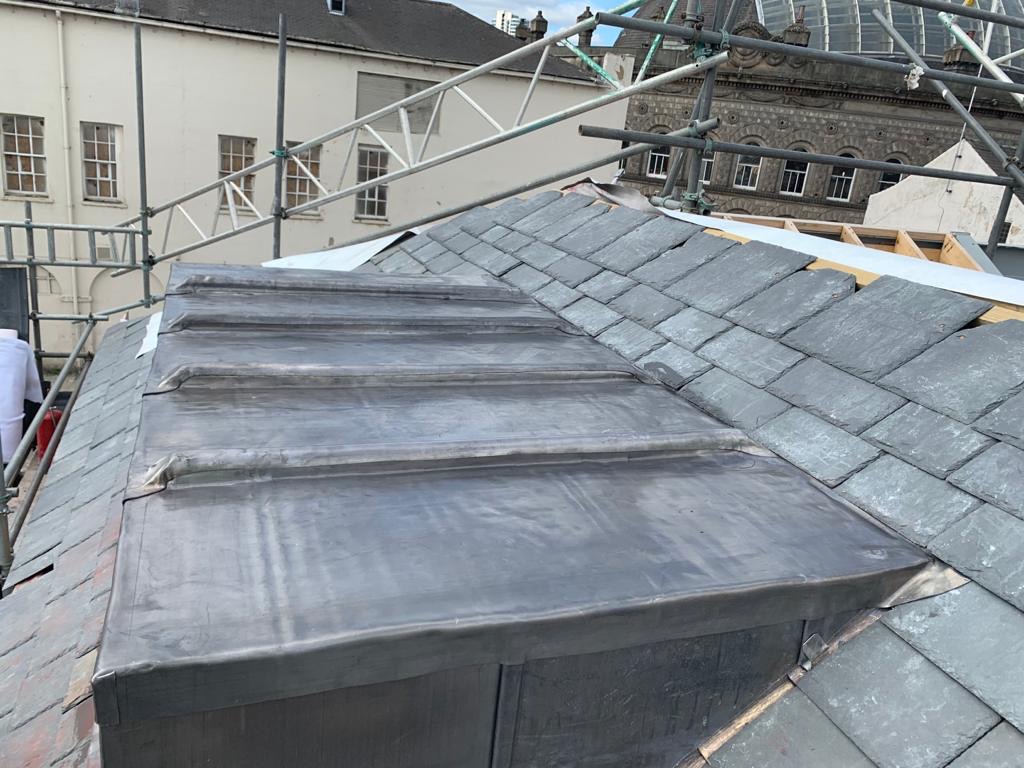
While we were onsite, in addition to the initial project, Allied asked if we could also fit leading to two dormers; a specialised job which they were not able to carry out themselves. Our three members of full-time staff are all trained and experienced in carrying out this work; we already had the skills and specialist tools required so agreed to do the work.
This involved measuring up for the lead needed, which we then cut to size and fastened to the front and cheeks of the dormer using steel nails and welts. This was then beaten down to make the joint completely watertight. On the tops of the dormers, we put down underlay quilt and then roll tops, which we cut to size and put at the correct distances to ensure that the lead had the correct overlap when we pressed it down around the roll tops. We finished with a coat of patination oil to preserve the lead.
Allied were once again pleased with the quality of our work and intend to ask us to complete the other two elevations in the future.